Computational Fluid Dynamics Modeling
Computational Fluid Dynamics Modeling
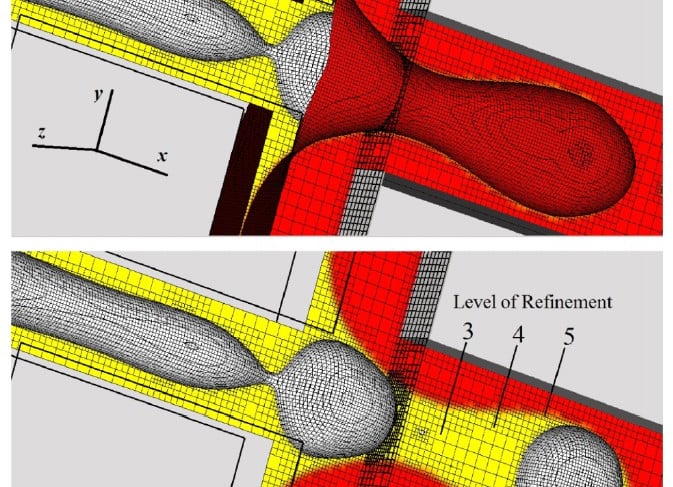
At ZTO Bio, our Computational Fluid Dynamics (CFD) Modeling service allows you to visualize, predict, and optimize complex biological and fluid systems before any physical prototype is made. CFD enables our clients to understand how fluids, cells, and materials behave under real-world conditions — without the expense, delay, or uncertainty of traditional trial-and-error experimentation.
Using advanced simulation tools and high-performance computing, we model fluid flow, heat transfer, diffusion, and droplet formation across microfluidic devices, bioreactors, and bio-printing environments. These insights help identify performance issues early, optimize designs, and accelerate product development cycles.
Why It Matters
Accelerated Innovation — Move from concept to results faster by testing virtual prototypes in hours instead of weeks.
Cost Efficiency — Eliminate repeated material costs, failed experiments, and unnecessary fabrication steps.
Deep Insight — Visualize invisible forces such as shear stress, turbulence, and nutrient transport that impact cell viability and product consistency.
Design Confidence — Validate and refine your designs virtually before committing to production.
Whether you’re developing next-generation microfluidic systems, tissue scaffolds, or bio-reactive environments, our CFD team helps you explore every variable, predict outcomes with precision, and build smarter, more efficient solutions.
Simulate. Optimize. Succeed — with ZTO Bio’s CFD Modeling.
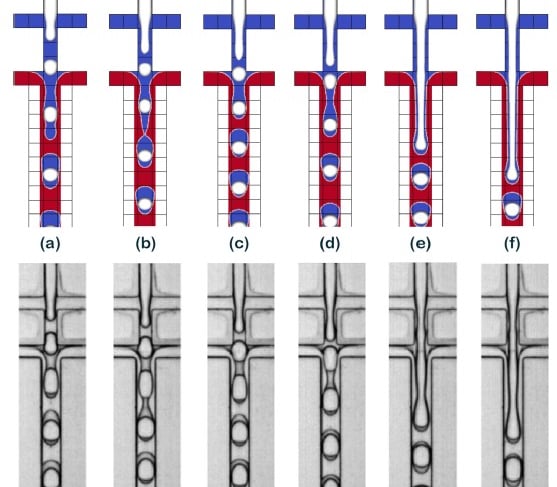
CFD and Neural Networks — Smarter, Faster Optimization
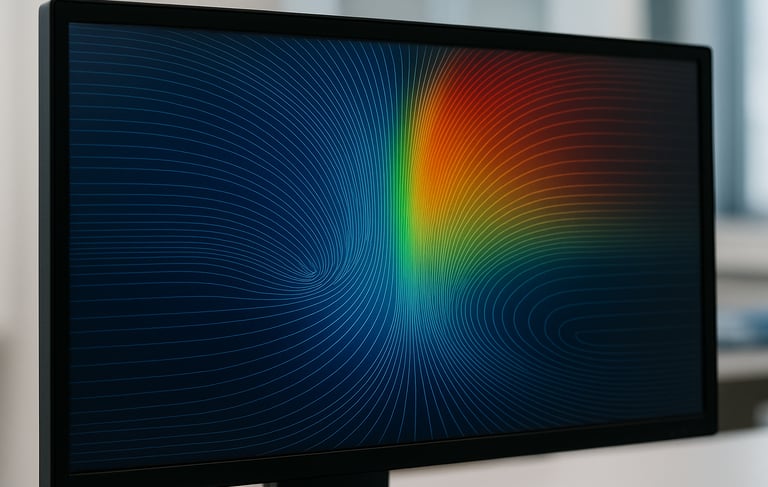
At ZTO Bio, we combine Computational Fluid Dynamics (CFD) with the power of Neural Networks to push simulation performance to a new level. Traditional CFD is computationally intensive — running thousands of iterations to explore how design or process changes affect outcomes. By integrating neural network models trained on simulation data, we can predict results instantly, allowing us to refine multiple parameters at once and discover optimal configurations in a fraction of the time.
This hybrid approach enables:
Rapid Design Iteration – AI models learn from simulation outputs, dramatically reducing the need for repeated full-scale CFD runs.
Cost-Effective Exploration – Evaluate hundreds of variable combinations (geometry, flow rate, viscosity, temperature) without the cost of new prototypes or extended compute time.
Smarter Parameter Tuning – Neural networks identify non-linear relationships between parameters that would be nearly impossible to isolate manually.
Predictive Insights – Once trained, the model can forecast performance across new designs, guiding decision-making before fabrication begins.
The result: a faster, data-driven design cycle that saves both time and resources while increasing the precision of your experiments and products.
ZTO Bio merges physics and intelligence — transforming simulation into prediction.